Racial Oppression and White Supremacy
Native SonRacial oppression and white supremacy in Native Son operate as a connected system of historical subordination, restricted opportunity, economic inequality, and unequal public judgment. The novel presents these forces not only in openly racist conduct but also in ordinary arrangements of housing, education, work, and law. Those restrictions help explain Bigger Thomas’s sense of confinement, while the response to the crimes surrounding him reveals whose safety and suffering the city is prepared to recognize.
Historical and Social Framework
The novel’s framing places the racial conflict of its present against more than two centuries of enslavement and segregation. The end of the Civil War did not end the dehumanization and exploitation of Black people: brutal repression persisted in the American South, while life in the supposedly integrated North could remain comparably severe. The persistence of racial fantasies among both Black and white Americans, despite this history, is part of the danger the novel asks the nation to confront.
The introduction describes the resulting social conditions as producing more than timidity or passivity. It identifies a deeply alienated response in which people estranged from both Black and white cultures may turn their hatred and violence against other human beings. That violence can be directed at fellow Black people and, increasingly, at white people. Bigger is presented as a particularly forbidding example of this response, not as an isolated explanation for the conditions around him. The novel thus holds individual violence beside the wider history that has shaped its possibilities without erasing the harm that violence causes.
Confinement in Everyday Life
The restrictions become concrete early in Bigger’s conversation with Gus. Bigger imagines that he could fly a plane, but Gus points out that the opportunity would depend on Bigger not being Black, having money, and being allowed to attend aviation school. The exchange links a personal ambition to racial exclusion, poverty, and blocked access to education. Their laughter does not dissolve the limits they have named; it gives way to Bigger’s attempt to describe how white and Black people inhabit different worlds.
Bigger experiences that division as a kind of imprisonment: Black residents are confined to one part of the city, while white people possess opportunities and freedoms denied to them. The comparison to looking through a knothole in a fence captures both proximity and exclusion. Bigger can see the larger world, but cannot enter it on equal terms. His questions about why Black people must live in one corner of the city and cannot fly planes or run ships make the restrictions spatial and practical, rather than merely a matter of private attitudes. Gus answers that white people make the laws, locating the limit in political power as well as in social custom.
Housing, Property, and Benevolence
The inquest’s questioning of Mr. Dalton brings the racial order into the sphere of property and business. Max asks who formulates policy for the companies and why the Thomas family and other Black families are charged more rent for comparable houses than white families. Mr. Dalton denies setting the rent scales. Asked whether company policy tends to keep Black people in one area of the South Side, he acknowledges that it works that way, while distancing himself from its origin.
This exchange places charitable giving beside the consequences of housing policy. Max challenges the contrast between donating millions to help Black people and charging them more for unsafe housing. The point is not simply that an individual benefactor has failed to be generous enough: charitable acts coexist with arrangements that restrict where people can live and leave them paying more for poor homes. The novel’s questions expose a gap between benevolent self-understanding and the material effects of property decisions. Good intentions, when detached from those effects, do not undo the structure that produces them.
Policing, Public Fear, and Unequal Recognition
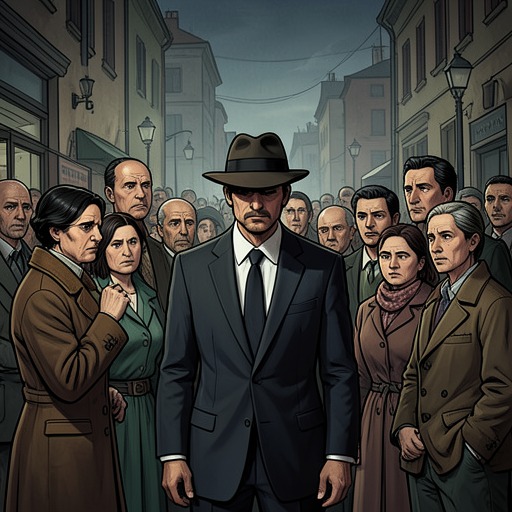
After Mary Dalton’s remains are discovered, a newspaper account turns the search for Bigger into a citywide racial crisis. Its presentation advances an unproven sexual-crime allegation, and its coverage records the deployment of thousands of police officers and volunteers around the Black Belt. Black homes are searched under a blanket warrant; transit leaving the South Side is stopped; Black men are rounded up, and reports describe beatings, smashed windows, and Black employees losing their jobs. Public fear thus acquires institutional force, extending suspicion beyond the accused to Black neighborhoods and workers as a whole.
The scale and language of the hunt contrast sharply with the treatment of Bessie. At the inquest, her body is introduced as evidence in the case concerning Mary’s death. Bigger understands that her killing will be used to strengthen the demand for his execution, while her death has not received comparable attention as the killing of a Black woman. His perception is that the city is mobilizing over the white victim while treating Bessie as an instrument in the prosecution of the Black accused. This contrast makes racial inequality visible not only in who is suspected, but also in whose death is publicly mourned and whose is made useful to a case.
The Court’s Diagnosis and the Novel’s Argument
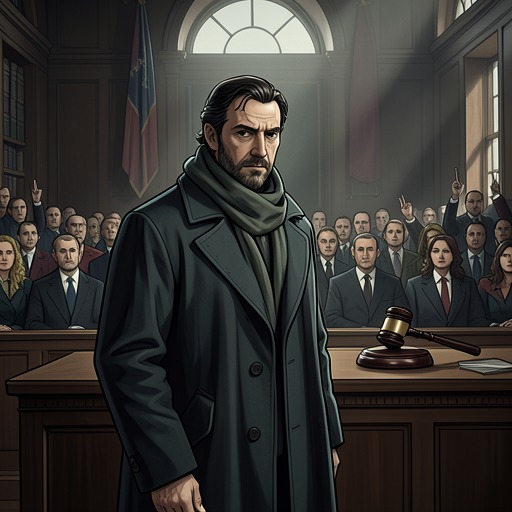
In his address to the court, Max asks the jurors to look beyond a simple division between individual blame and individual innocence. He says he is not asking the court to treat Bigger as an innocent victim of injustice; instead, he argues that the conditions producing Bigger’s life must be examined if the court is to understand the crime and its consequences. He describes restrictions on where Black people may live, what schooling they can obtain, where they can eat, and what work they can do. In his account, society first develops human capacities and desires, then bars people from acting on them.
The courtroom itself embodies the separation Max describes: Black spectators sit together behind a railing, apart from white spectators, without needing to be told to do so. Max broadens the argument from Bigger to millions of Black Americans held within the nation yet denied political, social, economic, and property rights. He warns that killing, denying, and separating people will not make the underlying conflict disappear. The courtroom speech therefore recasts the trial as an encounter between an individual defendant and a social order that has helped form the world in which he acts, even as it leaves his actions and their victims in view.
Across these scenes, racial oppression is both a lived boundary and a system that can present itself as ordinary policy, benevolence, or public safety. The novel connects exclusion from education and mobility to segregated housing, unequal policing, and unequal recognition of Black suffering. Its central warning is that a society cannot treat these conditions as natural or harmless and then claim surprise when they produce fear, hatred, and violence.